Sludge, corrosion and limescale can reduce heating efficiency and shorten your boiler’s lifespan. Treating and protecting your system water helps prevent damage, particularly in hard water areas.
Use our Water Hardness Checker to find out how hard your water is by entering your UK postcode.
A protected system runs cleaner, cheaper and for longer.
Lower gas bills
Clean heat exchangers and radiators transfer heat efficiently, so your boiler burns less gas to warm your home.
Boiler warranty compliance
Boiler manufacturers typically require treated system water to keep your warranty valid.
Building regulations compliance
Cleaning and protecting the system water is part of meeting building regulations for heating installs.
Longer life, better performance
Extend the lifespan of your boiler and system, and keep it running at its best for years.
WATER HARDNESS CHECKER
How hard is my water?
Enter your postcode to see where you sit on our water hardness map.
What is hard water?
Hard water contains a high level of dissolved minerals — mainly calcium and magnesium. Rainwater is naturally soft when it falls; it only gains its hardness once it meets the ground.
What happens next depends on the rock underneath. The UK has some of the most varied geology in Europe, which is why hardness can swing from almost nothing in the Scottish Highlands to some of the hardest water on the continent in the chalk country of southern and eastern England.
Hard Water
As water seeps into the ground and flows through mineral-rich rocks, it dissolves minerals such as calcium and magnesium, resulting in hard water.
Soft Water
As water passes through areas with fewer soluble minerals, it absorbs little to no calcium or magnesium, resulting in soft water.
How is hard water measured?
Hardness is measured in parts per million (PPM) — how many particles of hardness are dissolved in every million particles of water. Over time this has settled into seven bands.
Water companies often report hardness as mg/L calcium carbonate — for tap water that’s effectively the same number as PPM.
0 – 50
Soft
51 – 100
Moderately Soft
101 – 150
Slightly Hard
151 – 200
Moderately Hard
201 – 275
Hard
276 – 350
Very Hard
350 +
Aggressively Hard
Issues related to hard water
Problems start when hard water comes through the mains and into our homes for cooking, cleaning, washing and heating. Millions of people in the UK receive hard water.
When it’s heated — in kettles, dishwashers, boilers and other appliances — the hardness precipitates out as limescale. Scale blocks and damages pipes, makes appliances less effective, and can break them altogether, including your boiler.
Component damage
Limescale build-up
Limescale accumulates inside heat exchangers, pipes and other components, restricting water flow and reducing heat transfer.
Affected efficiency
Reduced efficiency
Limescale acts as an insulating layer, preventing heat from transferring efficiently. The boiler must work harder and use more energy to achieve the desired temperature.
Blockages
Restricted water flow
Deposits can narrow pipework and restrict circulation, potentially causing blockages, uneven heating and increased strain on pumps.
Poor circulation
Component Stress
Restricted heat transfer and poor circulation can contribute to localised overheating, component stress and premature equipment failure.
What you can do about it
Hard water doesn’t have to mean costly heating system problems. Fernox offers a range of solutions to help protect your boiler, reduce limescale build-up and maintain heating system efficiency.
1
Protect your boiler
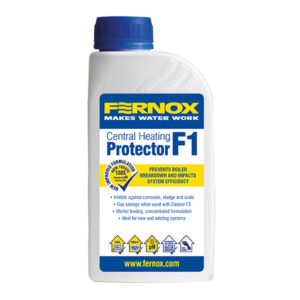
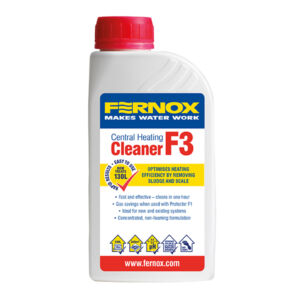
Start with a clean system. Fernox Cleaner F3 helps remove sludge, debris and loose limescale. Once cleaned and flushed, dose with Protector F1 to provide long-term protection against internal corrosion and limescale formation.
2
Fit a system filter
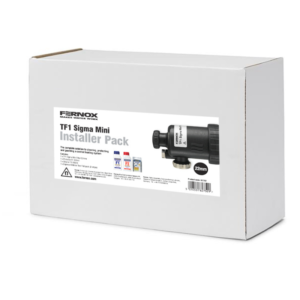
Fit a TF1 Sigma Mini to capture circulating magnetic and non-magnetic debris before it can accumulate in your boiler and pipework. Combined with the right chemical treatment, it helps keep your heating system clean and protected.
3
Reduce scale
In hard water areas, consider a Fernox Scale Reducer to help prevent limescale build-up. Choose an electrolytic model for whole-house protection or a magnetic model for individual appliances, including boilers.
4
Descale little and often
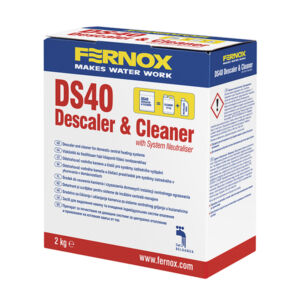
Where limescale has already built up in hot water systems, Fernox DS40 Cleaner and Descaler can help dissolve deposits and restore performance. For everyday household appliances such as kettles and showerheads, use a suitable domestic descaler regularly.