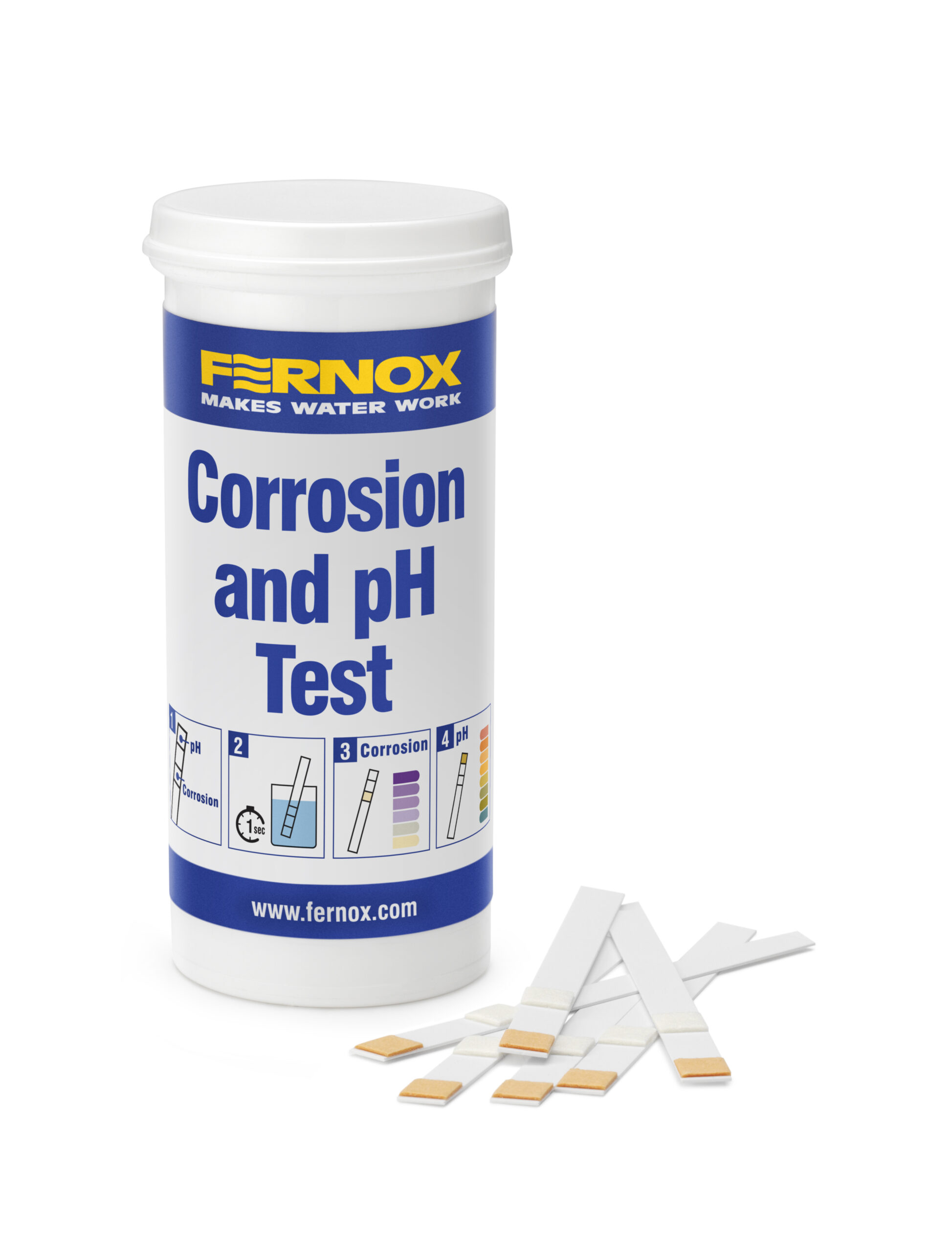
Corrosion and pH Test

Product Code:
62791

The Corrosion and pH Test provides a rapid on-site test to determine the corrosion and pH levels in central heating system water.

  • Quick and simple on-site testing which provides instant conclusions and recommendations
  • One test strip per system. Each pot contains 50 test strips.
  • Suitable for testing the presence of dissolved metals and pH levels in central heating system water
  • Allows compliance with BS 7593:2019 and the Benchmark scheme
  • Facilitates compliance with boiler warranties
Product Overview

The combined Fernox Corrosion and pH Test Strips (50 strips) measure the levels of dissolved metals in the system, indicating the extent of corrosion within the heating system. These test strips detect copper in the system and determine the water’s pH levels, identifying whether it is too acidic or alkaline. Excessive acidity or alkalinity can accelerate metal corrosion, especially in mixed metal systems. Corrosion is a significant issue as it can erode pipes, cause leaks, and lead to blockages. Therefore, ensuring the system is free from corrosion is crucial.

Application

How to Use:
1. Take a sample of system water which is representative of the system as a whole (drain the water for several seconds before taking the sample)
2. Dip the test strip into the system water for 1 second and remove.
3. Compare to colour chart within 10 seconds
4. Match the pad at the bottom end of the strip with the pH colour chart
5. If the colour of the pad does not match the chart on or in between pH 7 to 8.5 then this indicates that the system water may be too acidic (below pH 7) or too alkaline (above pH 8.5)
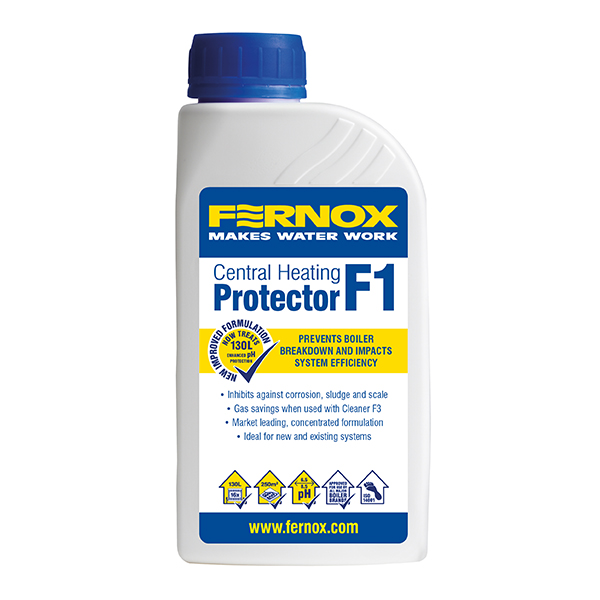
6. If the pH result does not show between 7 and 8.5, Fernox recommends adding Protector F1
7. Match the pad at the top end of the strip with the Corrosion colour chart
8. If the colour of the pad shows higher than 2ppm then this indicates a corrosion problem in the system as dissolved metal ions have been detected
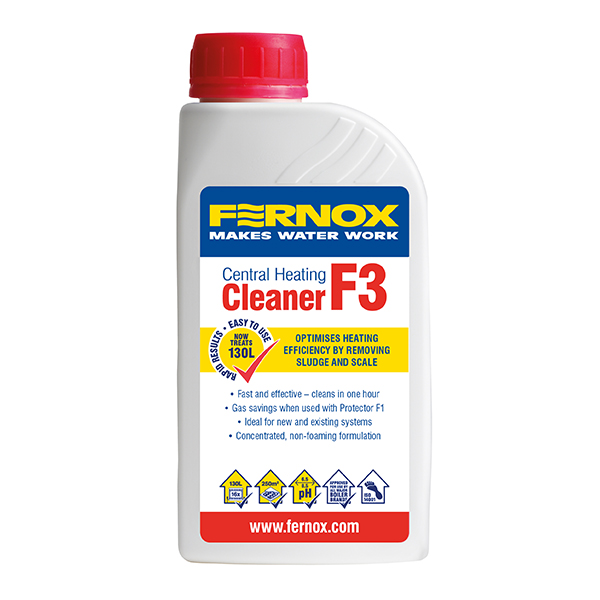
9. If the Corrosion pad shows higher than 2ppm Fernox recommends adding Cleaner F3, flushing and draining the system, and then refilling the system and adding Protector F1
10. Once these actions have been done, a retest can be done.

Package & Handling

The test strips are supplied in a vial of 50 strips. The test strips are non-hazardous, but should be kept out of reach of children.

Volumetrics
Product CodeSingle Unit BarcodeSingle Unit Dimensions (Depth x Width x Height)Single Unit Weight(Kg)Outer Carton Barcode (ITF)Outer Carton Dimensions (Height x Width x Depth)Outer Carton Box Weight(Kg)
62791
5014551627918
86 x 29 x 29 mm
0.03
05014551005228
110 x 150 x 180 mm
0.50
Frequently Asked Questions
Corrosion occurs when a refined metal reverts back to its natural ore state. Corrosion in water systems takes place when two areas of metal with a different electrical charge are in contact or linked via a conductor such as water. Corrosion occurs when a refined metal reverts back to its natural ore state. Corrosion in water systems takes place when two areas of metal with a different electrical charge are in contact or linked via a conductor such as water. What should be done? An inhibitor should be added to system water to reduce the rate at which corrosion takes place. To determine the existing level of protection simply use the Fernox Protector Test Kit to measure the concentration of inhibitor within the system for an instant on-site result. Over and under-dosing with inhibitors Although manufacturers specify a recommended dose rate for their product, it is important to find out how a product performs when over or under-dosed. Anodic passivating products will require a sufficient dose to ‘coat’ the internal surfaces of the system, plus some excess to maintain this film. If the dose is below the level required to achieve sufficient protection, exposed areas of metal will continue to corrode. Over-dosing with anodic inhibitors is unlikely to have any detrimental effect. Negative impact of contaminants However, corrosion inhibitors will not be fully effective if under-dosed, but will have a partially protective effect. Negative impact of contaminants The presence of contamination by flux residues, existing corrosion sludge, residual cleaning agent, or even washing-up liquid may adversely affect the performance of an inhibitor and lead to corrosion. To make sure an inhibitor performs as effectively as possible, it is advisable to clean the system thoroughly before treating. the Fernox Water Test Kit, the Fernox F3/ F5 Cleaner Test Kit or the Total Dissolved Solids (TDS) Meter can be used to check that a system has been adequately cleaned and flushed before an inhibitor is added.
Algae in feed and expansion cisterns Leathery skins or films of algae on the surface of expansion cisterns in open vented systems are caused by fungal mould growths. It occurs when the expansion cistern is not properly covered causing dust, insects and spores to be able to enter the water. Algae in feed and expansion cisterns Underfloor heating systems are also susceptible to microbial growth due to the lower temperatures at which these systems operate. Gas in the system Microbiological fermentation in a system could result in flammable gas. Methane gas, which burns with a blue flame, is most often found.Hydrogen sulphide (emitting a ‘bad egg’ smell) may also occur, and is associated with the presence of corrosive sulphate-reducing bacteria. Bacterial or yeast infestations caused by organisms entering the system from the supply water; debris in new systems or through air contact in open expansion cisterns can also occur. What should be done? To combat algae in open vented systems, empty the cistern and disinfect with Fernox AF-10 Biocide or Fernox LP Sterox. Refill the tank, adding the correct dose of AF-10 Biocide (refer to the instructions on the container)and top up the concentration levels of Protector F1. Ensure the tank is fitted with a purpose-made lid to prevent future contamination of the tank. When there is gas in a system,use Fernox AF-10 Biocide to control microbiological growths and prevent gas build-up. Where contamination is significant,several repeat doses of biocide may be required: in such situations, it may be appropriate to drain and retreat the entire system. Bacterial contamination in air and ground source heat pumps When there is bacterial contamination in air and ground source heat pumps, Fernox HPCleaner can be used. Before use, it should be diluted using no more than 600 litres ofmains water per one litre of HPCleaner (equivalent to 600 metres of 40mm pipework). The ground collector must be flushed out with fresh mains water before being filled with the diluted product.Having circulated the HP Cleaner for at least one hour, after whichit should be flushed out until thewater runs clear. Fill the ground collector with Fernox HP-5 /HP-5c or HP-15 / HP-15c depending on the level of frost protection required.

Featured Products

Country